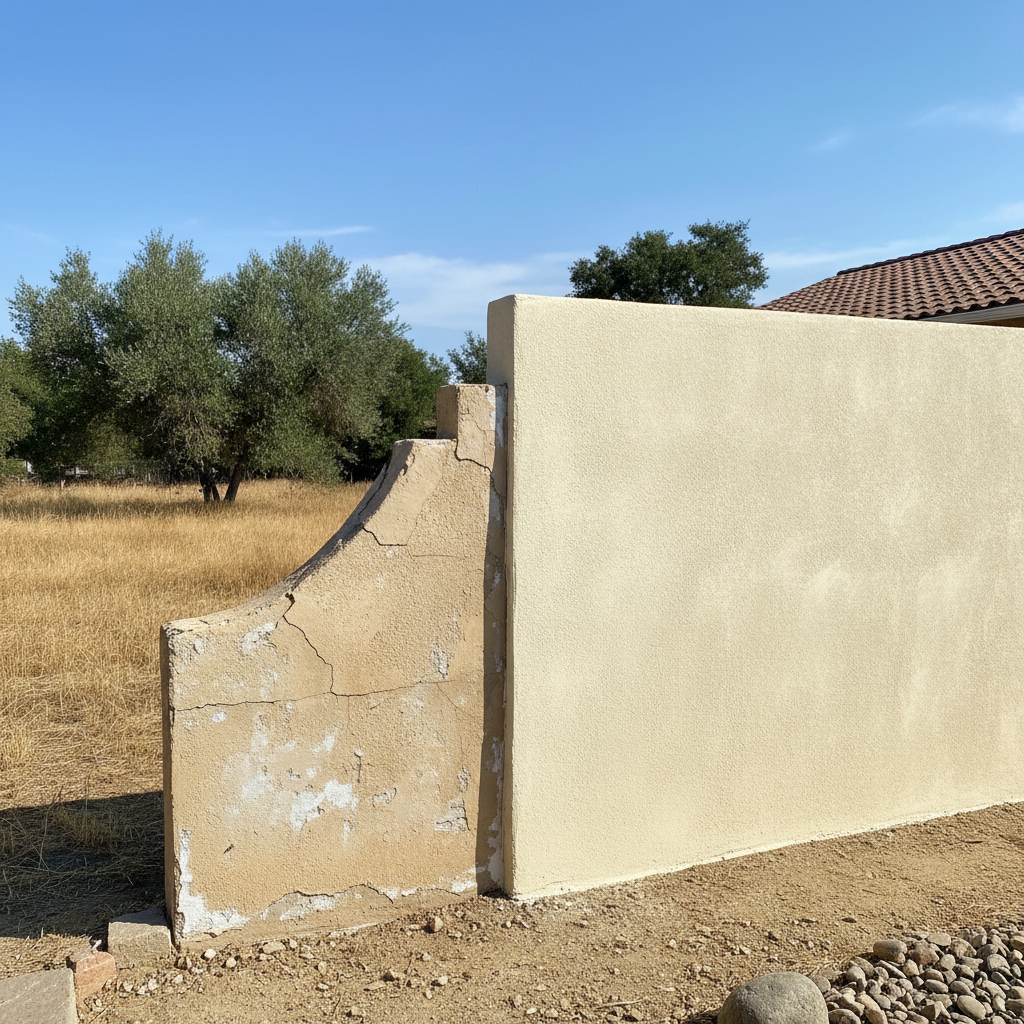
You've got stucco damage, and now you're staring at a few options. Do you just fix the bad spot, or do you bite the bullet and redo the whole wall, or even the whole house? It's a common question I get all the time here in Roseville, especially with our hot summers and occasional heavy rains that can really take a toll on exteriors. Let's talk about the two main approaches: patching and full resurfacing.
Patching Stucco: The Quick Fix
Patching is exactly what it sounds like. We identify the damaged area – maybe it's a crack, a hole from an impact, or some water damage around a window – and we repair just that section. It's usually quicker, less disruptive, and definitely cheaper upfront. For minor, isolated issues, it can be a perfectly good solution.
Here's the thing with patching, though: matching. Stucco, especially older stucco, has a unique texture and color that's developed over years of sun exposure and weathering. Trying to perfectly match a new patch to old, faded stucco is like trying to match a fresh paint swatch to a wall that's been baking in the Roseville sun for 15 years. You can get close, but you'll almost always see a difference, especially in certain light. We do our best, feathering the edges and trying to blend the texture, but it's rarely invisible. If you've got a small, out-of-the-way spot, you might not care. But if it's right on the front of your house, it could stick out like a sore thumb.
Durability-wise, a good patch will hold up just as well as the surrounding stucco, assuming the underlying issue (like water intrusion) has been properly addressed. But if you're patching because of widespread hairline cracks or general deterioration, you're really just playing whack-a-mole. You fix one spot, and another might pop up next year.
Full Stucco Resurfacing: The Comprehensive Solution
Now, full resurfacing is a different ballgame. This means we're applying a new layer of stucco over the existing, damaged surface. Sometimes this involves removing the worst of the old stucco first, especially if it's delaminating or severely compromised. Other times, we can go right over it after proper preparation. The big advantage here is uniformity. You get a completely fresh, consistent look across the entire wall or even the whole house. No mismatched patches, no visible seams.
From a durability standpoint, a full resurface essentially gives your home a brand-new skin. If done right, it's incredibly robust. It seals up all those tiny cracks you might not even see yet, provides a fresh layer of protection against our intense summer heat and any future moisture, and brings your home's exterior back to life. Think of it as a reset button for your stucco.
Cost and time are the main downsides here. It's a bigger project, takes longer, and costs more than a simple patch. But you're investing in the long-term health and appearance of your home. For homes in older Roseville neighborhoods like those around the Sierra View Country Club, where the original stucco might be showing its age, a full resurface can dramatically improve curb appeal and add significant value.
Which One's Right for Your Roseville Home?
So, how do you decide? Here's my take:
- For small, isolated damage: If you've got a single, contained crack or a small impact hole, and the rest of your stucco is in good shape, a patch is probably fine. Just be prepared for a potential color or texture difference.
- For widespread cracking, fading, or multiple repair spots: If your stucco is generally looking tired, has numerous hairline cracks, or you've got several areas needing attention, you're going to be happier in the long run with a full resurface. Trying to patch a dozen spots will end up looking like a checkerboard, and you'll likely spend more in piecemeal repairs over time than you would on one comprehensive job.
- For significant water damage: If you're dealing with extensive water intrusion that's compromised large sections of your stucco, a full resurface (after addressing the water source, of course) is almost always the way to go. You need to ensure the entire affected area is properly sealed and protected.
Ultimately, it comes down to what you're trying to achieve and your budget. If you're planning to sell your home soon, a full resurface can significantly boost curb appeal and buyer interest. If you're staying put for a while, it's an investment in your home's longevity and your own enjoyment of it.
My recommendation for most homeowners in Roseville, especially if your stucco is more than 15-20 years old, is to lean towards a full resurface if the damage is anything beyond a very minor, isolated spot. You'll get a better, more durable, and more attractive result. You won't have to worry about future patches standing out, and you'll have peace of mind knowing your home's exterior is solid for years to come. Give us a call at Roseville Stucco & Plastering, and we can come out, take a look, and give you an honest assessment of what makes the most sense for your place.